

Business optimisation with AI tools
- A review of your operations: where hours and money leak
- AI tools connected to your data, with clear limits on who may do what
- Manual steps automated, no new system required
 Acutis Tekton
Called to serve.
We help companies work faster and cheaper: AI tools in everyday operations, apps that work, and systems someone actually maintains.
01 — Services
Five ways. Each has its own page with what you actually get and when it makes sense to call. You do not need to know the tech — that is our job.
02 — Case studies
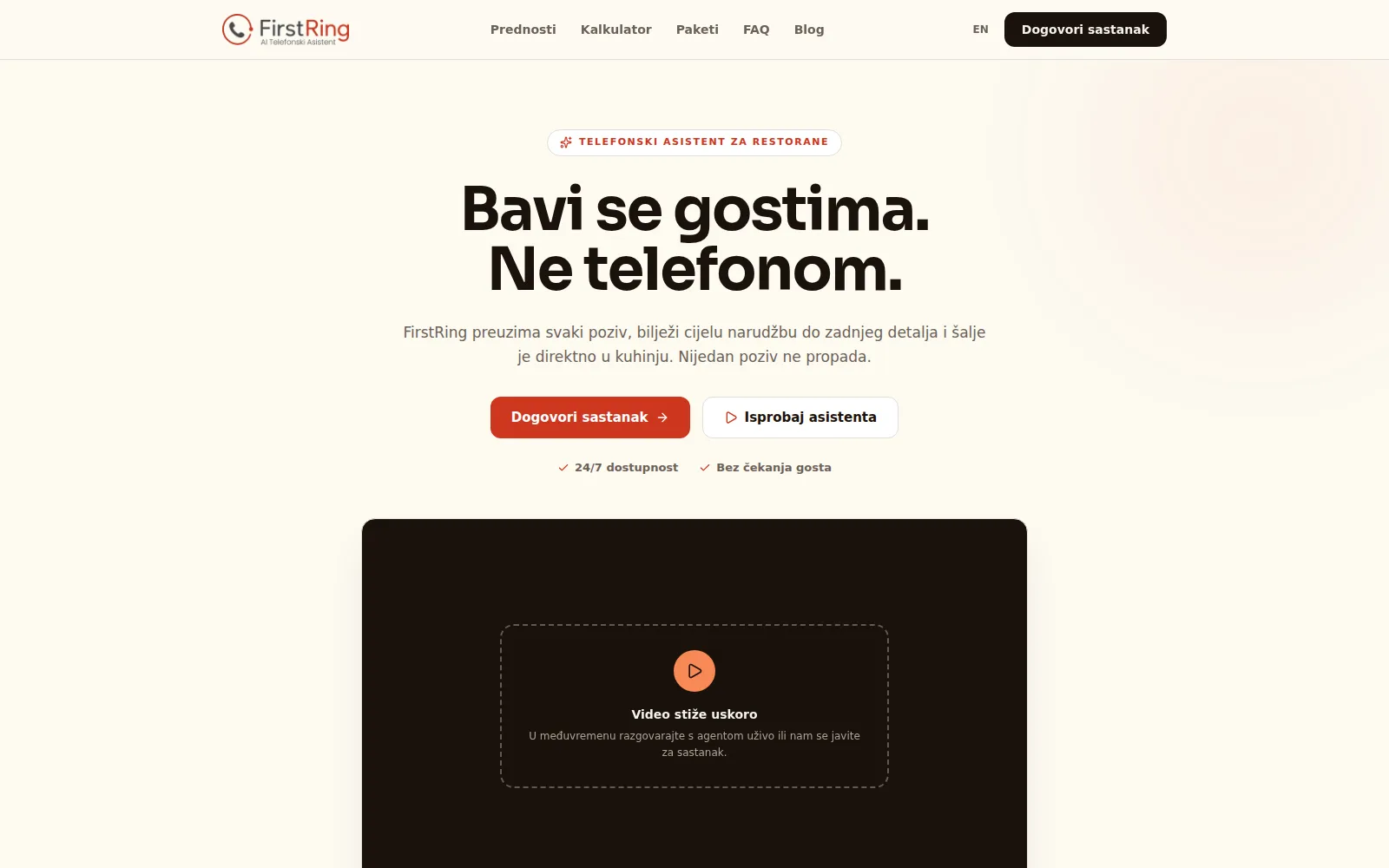

Answers every call, takes orders and reservations and sends them to the kitchen, 24/7. In partnership with the agency Fuel Your Digital.

Taking over and maintaining existing digital infrastructure. Continuous work, no service interruption.

Peer-to-peer transport marketplace, built in Kotlin Multiplatform. MVP stage.
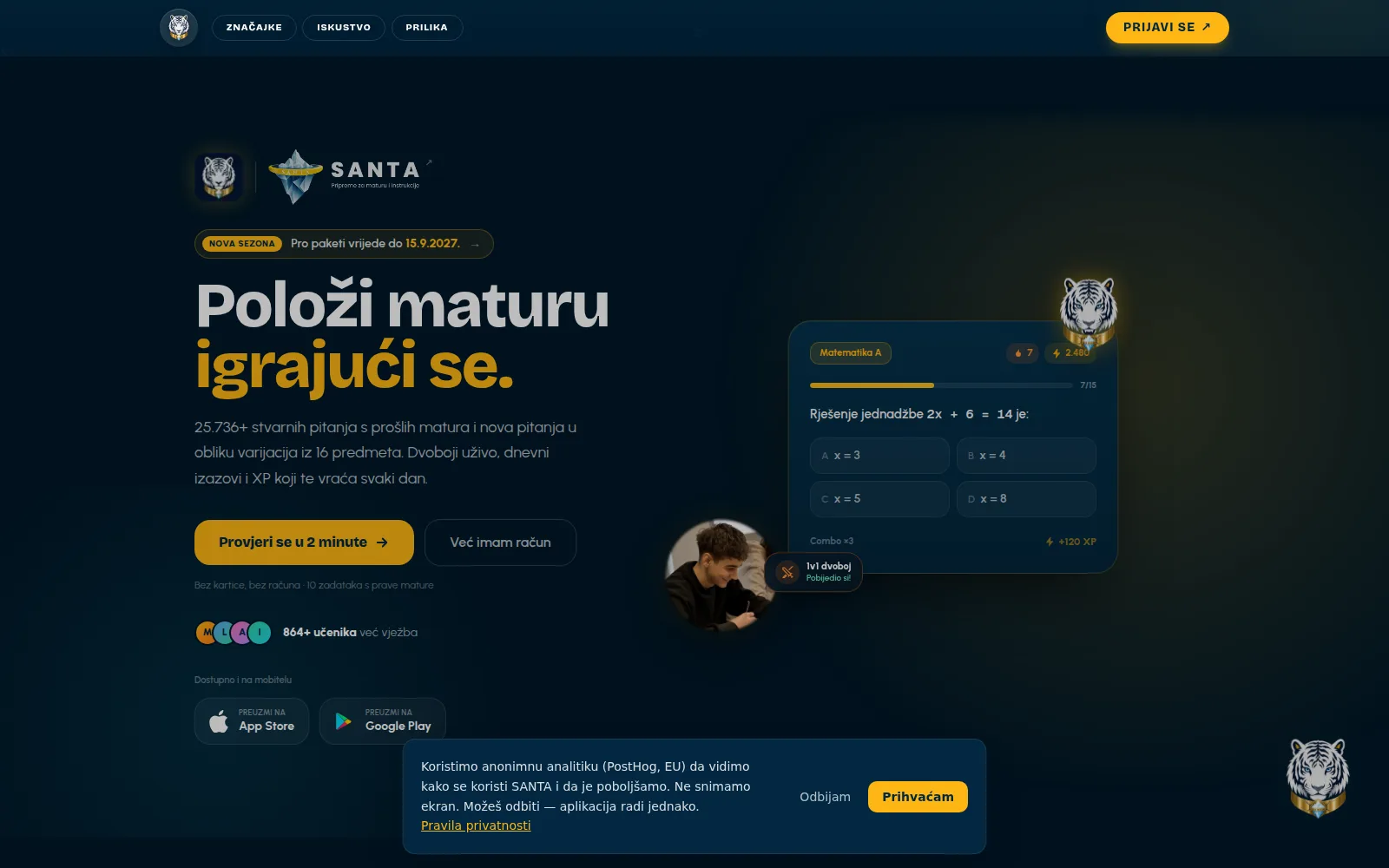

State-exam preparation as a game: 25,000+ questions across 16 subjects, mock exams, 1-on-1 duels and progress tracking. On mobile and web.
03 — Position
"Everyone is born an original, but many die photocopies."
Carlo Acutis, 1991–2006
In the age of artificial intelligence, building has become cheap. Machines produce the average of everything they have seen — photocopies, in a second.
What is scarce is not labour, but the judgement that gives an idea its shape. That is why we do not call ourselves developers or builders. We shape.
A product exists to be useful to someone, not to impress.
The same price and the same truth for everyone. No surprises at the end.
Precision, completion, care for detail. Work is not handed over half-done.
04 — How we work
Five steps, the same on every project. If something goes off plan you hear it at the weekly demo, not at the end.
Forty-five minutes about how you work and where it creaks. No slides and no jargon. If I cannot help, I will say so straight away and suggest someone who can.
Scope, price and timeline before anyone signs anything. The same price for everyone — no negotiating margin built into the first number.
Every week you see something that runs, not a percentage-complete report. If the direction is wrong you find out in a week, not in three months.
The code is in your repository from day one. It comes with documentation written so another developer can follow it without me.
Launch is not the end. We agree response times and who covers what, instead of me disappearing when the handover is signed.
05 — Studio
Tekton is the Greek word for builder — the trade Jesus worked for thirty years before he spoke.
Carlo Acutis was programming at twelve, used code to serve others, and died at fifteen. He left a sentence that became our measure: everyone is born an original, many die photocopies.
Today machines produce photocopies faster than ever. We do the other thing.
The studio is run by a senior Android and Kotlin Multiplatform developer based in Zaprešić, Croatia. One pair of hands on every project, fair pay for collaborators, and room for young developers still learning the craft.
lat. acutus
Sharp, sharpened, precise. After St Carlo Acutis (1991–2006), who taught himself to program and built websites for parishes and charities.
grč. τέκτων
Builder, carpenter, craftsman. The root of the word architect (arche-tekton, "master builder") and of tectonics.
Sharpened craftsmanship
Precision and craft. The name stands alone — no "studio", "labs" or "agency" after it.
06 — Questions
No. Most of our clients are not technical. We talk about your business, your processes and your numbers, and we translate the technology into plain language. The decisions we ask of you are business decisions, not technical ones.
It depends on scope, but you get the price in writing before anything is signed. No estimate that doubles halfway through — if the scope grows, we talk about it before the work happens.
A smaller project is usually six to ten weeks, a larger one longer. You get the timeline with the proposal, and the weekly demo shows whether we are holding to it.
You do. The code is in your repository from the first commit, not transferred at the end. No licence, no lock-in, no dependency on me to deploy.
Yes, and it is a common case. I can step in as the missing senior, do code review, or take over one part of the system while the team handles the rest.
They almost always do. That is what the weekly demo is for — a change is spotted early, we assess what it means for time and cost, and only then it gets built.
Yes, without discussion. Send your form or use mine.
I will tell you honestly, and sometimes the answer is no. If a process does not consume enough hours to justify building and maintaining it, you are better off without it.
The studio is small, deliberately. For larger scopes I work with trusted collaborators, paid fairly and on time — but on your project you always know who writes the code.
Write a few sentences about what you are building. I reply within one business day — me, not a form.
Or directly
info@acutis-tekton.com